
Documentary Film • 42 min • Iran (2023)
About the Film
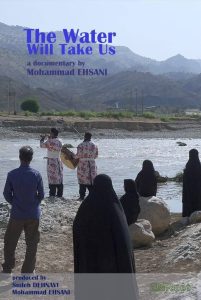
Water Will Take Us is a powerful environmental documentary exploring how human perception, limited knowledge, and policy gaps can turn natural flood events into devastating humanitarian crises. Focusing on the devastating 2019 floods in Iran, which swept through the north, central, and southern provinces of the country, the film presents the experiences of three women whose lives were directly affected, bringing a human dimension to a national environmental disaster.
Through their stories, the documentary reveals the complex interplay of climate change, management, land-use decisions, and government response. Rather than framing floods as unavoidable natural tragedies, Water Will Take Us challenges viewers to rethink our relationship with water. It advocates for a shift from resisting natural systems toward understanding and adapting to them—key to building sustainable, resilient futures.
The film has been screened at universities, environmental research centers, and international festivals, sparking discussions about climate resilience, water governance, and disaster preparedness.
ENRoot played a key role in the development of the documentary through:
- Knowledge transfer and conceptual guidance
- Environmental research communication
- Supporting production and narrative development
By connecting scientific insights with socially grounded storytelling, ENRoot helped ensure the film serves as a bridge between research, communities, and policy dialogue.
Themes
- Climate Change & Water Mismanagement
Highlights the complex interplay between climatic realities and socio-political decisions that amplify natural hazards. - Human Voices & Resilience
Centers the lived experiences of survivors, showing how communities cope, adapt, and resist amid crisis. - Awareness & Policy Discourse
Screenings often include expert panels and discussions on flood resilience, sustainable water governance, and community involvement.
Festival Screenings
Water Will Take Us has been featured internationally at prominent environmental and human-rights film festivals:
- 9th Iranian Film Festival – Cologne, Germany
- 9th Green Montenegro International Film Festival – Montenegro
- 29th Serra da Estrela International Environmental Film Festival – Seia, Portugal
- 31st Eco Cine International Environmental & Human Rights Film Festival – Brazil
- 11th Water Docs Film Festival – Canada
- 14th Cinema Verde International Environmental Film & Arts Festival – USA
- 10th International Festival of Socio-Environmental Cinema PLANET.Doc – Brazil
Academic & Research Institutions
- Lorestan University – 2022, Khorramabad, Iran.
- Water Security and Climate Change Conference (WSCC 2022) – 2022, Bangkok, Thailand.
- Environmental Film Series, Technical University of Dresden – 2023, Dresden, Germany.
- UCLA Center for Near Eastern Studies (CNES) – 2025, Los Angeles, USA.
Reception & Comments
While not yet widely reviewed in mainstream media, the film has received thoughtful praise from academic audiences, festival juries, and environmental experts:
“A timely and essential film that exposes how human choices amplify natural disasters.”
“A deeply human portrayal of climate vulnerability, told through voices often missing from environmental storytelling.”
“Combines emotional testimony with critical environmental insight—an important contribution to climate dialogue.”
“A call to rethink how we coexist with water rather than fight against it.”
These reflections highlight the film’s impact in sparking discussions around climate risk and sustainable water management.
Credits
Director: Mohammad Ehsani
Producer: Sudeh Dehnavi & Mohammad Ehsani
Cinematography: Mehdi Azadi
Editing: Loghman Sokhanvar
Sound Design & Mixing: Hossein Ghorchian
Sound Recording: Ali Alavi & Alireza Novinnezhad
Production Manager: Majid Fardi Anvar
Color and Light Correction: Hossein Sedaghi
Photography: Priya Hosseinzadeh
Knowledge Transfer and Scientific Coordination: Sudeh Dehnavi